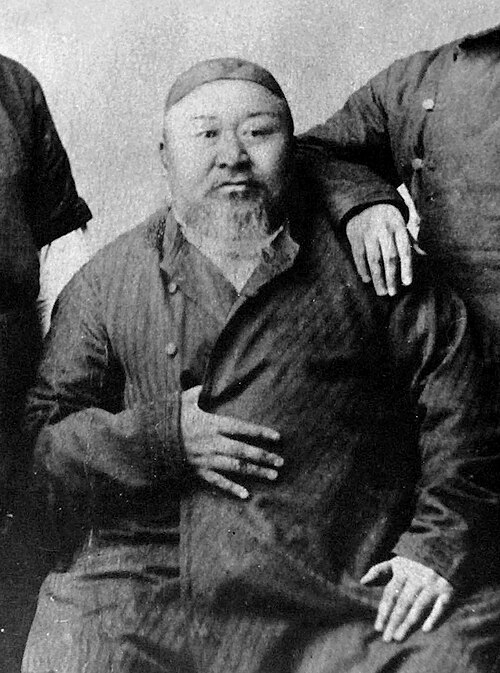
Abai Kunanbaiuly
Great Poet, Philosopher, Thinker
Great Kazakh poet, composer, philosopher, and founder of written Kazakh literature.
Abai (Ibrahim) Kunanbaiuly (1845–1904) was a monumental Kazakh poet, philosopher, composer, cultural reformer, and the founding father of modern written Kazakh literature.
Early Life and Education
Abai was born in the Semey region (present-day Abai Region, Kazakhstan). Raised in an influential noble family, he demonstrated an extraordinary intellect from a young age. He received his education at the Ahmed Riza Madrasah, mastering Eastern classical literature in Persian, Chagatai, and Arabic. Later, his self-directed study of Western philosophy and European literature uniquely positioned him as a cultural bridge between East and West.
Literary Reforms and Legacy
Abai revolutionized Kazakh poetry by introducing new meters, stanzas, and profound philosophical dimensions. Moving beyond oral traditions, he advocated for enlightenment, science, literacy, and humanism. As a translator, he beautifully rendered the works of Alexander Pushkin, Mikhail Lermontov, and Johann Wolfgang von Goethe into Kazakh, enriching the national language.
The Book of Words
His magnum opus, 'The Book of Words' (Qara Sozderi), is a collection of 45 philosophical essays and moral parables. In this masterpiece, Abai addresses fundamental ethical questions, critiques social flaws, and outlines his concept of the 'Complete Person' (Tolyq Adam). It remains the foundational masterpiece of Kazakh national philosophy.