Sherter: Traditional Kazakh Plucked String Instrument
History & Cultural Significance of the Sherter
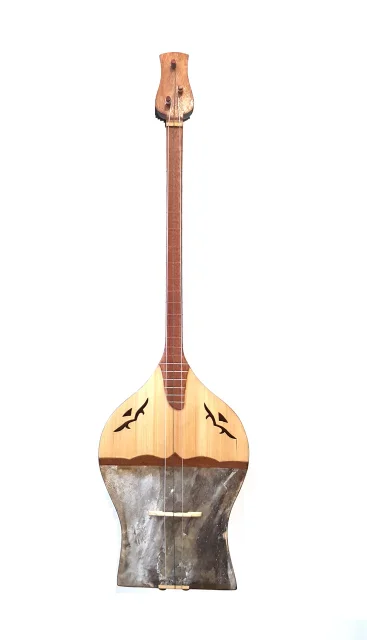
The Sherter is an ancient Kazakh plucked string instrument, widely considered a precursor to the modern Dombra. Favored by nomadic herders, it features a compact frame and a deep, earthy acoustic tone.
Construction & Anatomy
- Soundbox: Traditionally carved from a single piece of wood, the front soundboard is covered with dried skin (camel or goat leather), producing its signature resonant timbre.
- Strings: Historical versions utilized horsehair or sheep gut strings, whereas modern adaptations often employ nylon or synthetic materials.
- Neck: Features a noticeably shorter neck and fewer frets compared to the classic Dombra.
Performance & Modern Revival
The Sherter was historically used to accompany epic storytelling and traditional folk ballads. Today, it plays a vital role in national folk instrument orchestras and ensemble performances.