Understanding Kazakhstan's 2026 Constitution: Key Changes, Progress, and Concerns
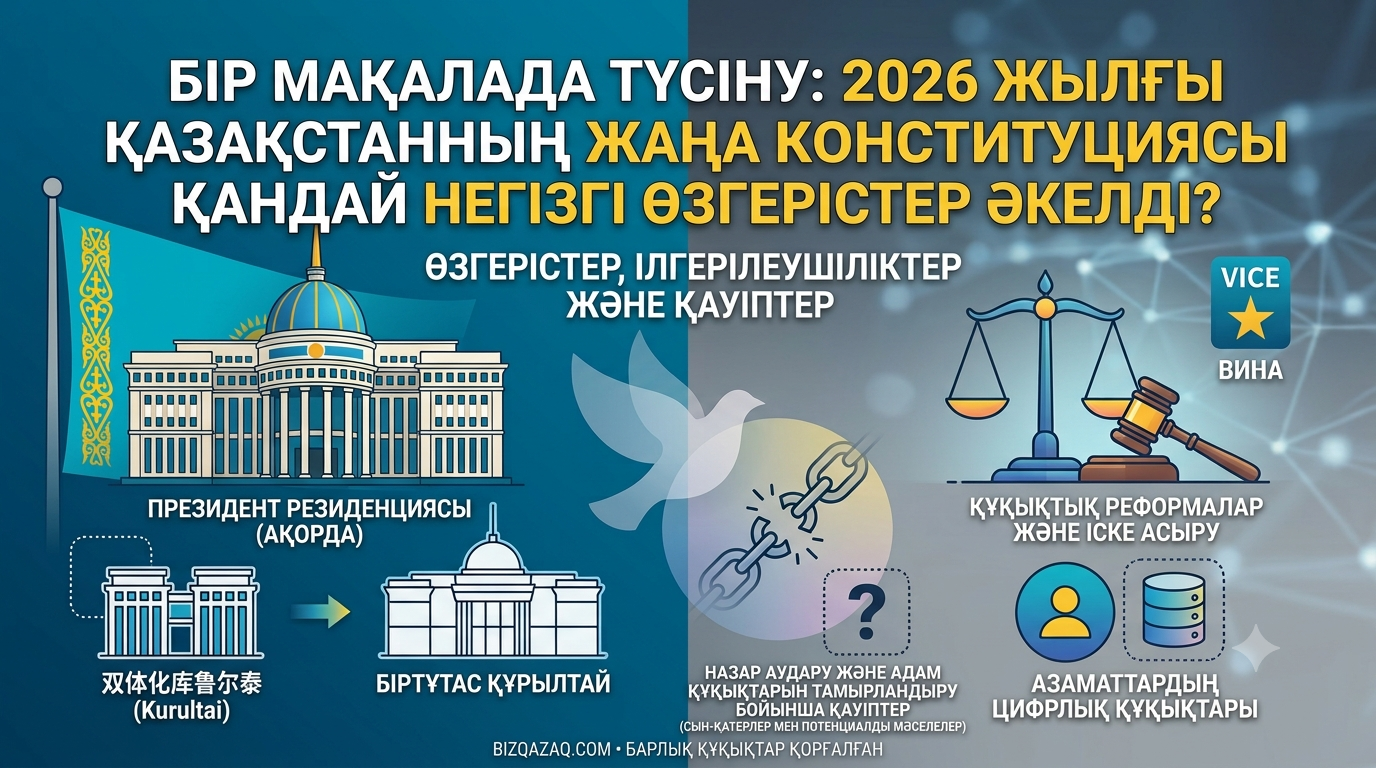
Following the national referendum on March 15, 2026, Kazakhstan officially enacted its new Constitution on July 1, 2026. This landmark legal document introduces fundamental shifts in governance, state institutions, and regulatory frameworks.
1. Key Institutional Restructuring
Unicameral Parliament: The Kurultai
The former bicameral parliament (Senate and Majilis) has been consolidated into a single unicameral body bearing the historical title Kurultai, designed to streamline the legislative process.
Re-establishment of the Vice Presidency
The position of Vice President has been reintroduced. Appointed directly by the President, the Vice President assists in administrative governance and international diplomatic representation.
Digital Rights and Transparency Frameworks
New articles incorporate explicit constitutional protection for digital data privacy and stringent compliance guidelines regarding financial transparency for non-governmental organizations (NGOs).
2. Progressive Reforms
- Legislative Efficiency: Streamlining the parliamentary structure accelerates economic and legal decision-making.
- Preservation of Term Limits: Retains the strict single 7-year presidential term limit without eligibility for re-election.
- Data Privacy Guarantees: Elevates digital data security to a constitutional protection standard.
3. Legal and Institutional Concerns
- Checks and Balances: Removing the Senate eliminates a legislative filter, raising concerns about executive overreach.
- Centralization of Appointments: Executive appointment of key officials without mandatory parliamentary vetting may diminish oversight.
- Compliance Pressures on NGOs: Stricter financial scrutiny could potentially limit civic organization operations.