Asyk Atu (Sheep Bones Game)
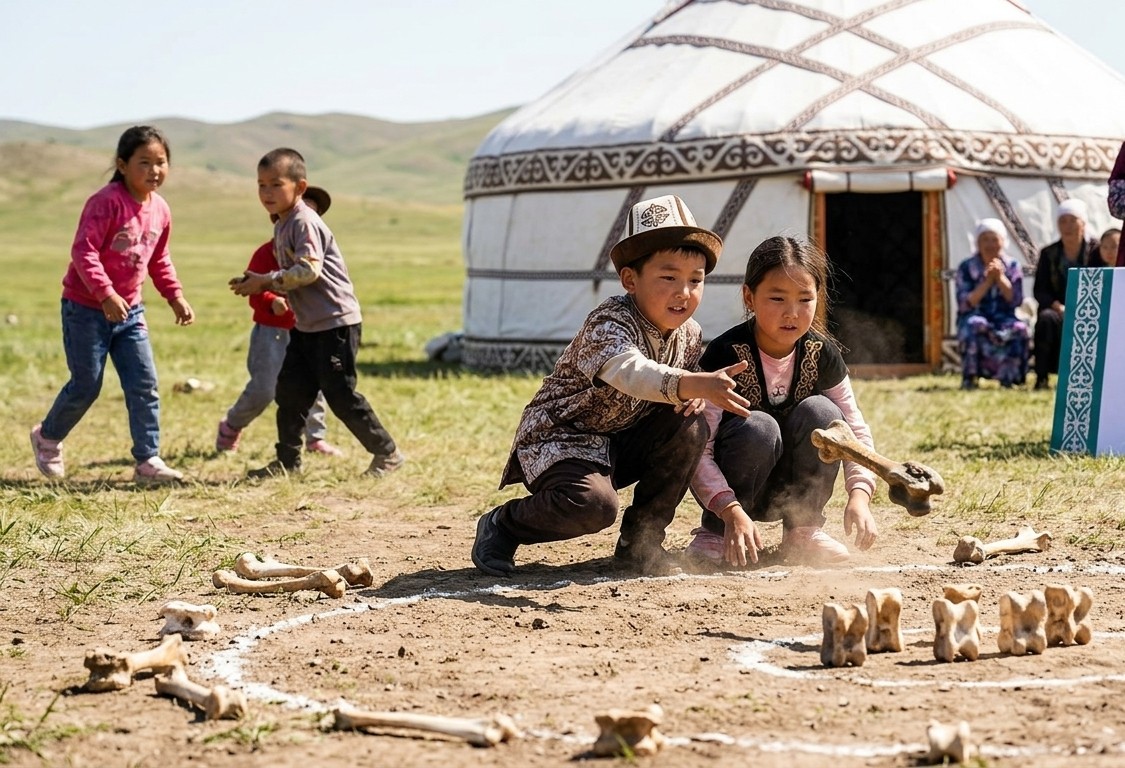
Asyk Atu is one of the oldest and most beloved folk games in Kazakhstan, primarily played by children and youth. The game centers on using carefully selected and sometimes weighted sheep anklebones (asyks) on the ground. Players compete in precision throwing to knock targets or win bones, testing physical accuracy, manual dexterity, and strategic calculations.
Origins & Cultural Significance
Asyk Atu dates back millennia to ancient nomadic steppe cultures, with archaeological evidence pointing to Saka and Hunnic eras. The sheep anklebone (asyk) served as both a toy and an essential educational tool designed to develop precision, patience, strategic thinking, and dexterity in children. In 2017, it was inscribed on the UNESCO Representative List of the Intangible Cultural Heritage of Humanity.
Key Rules & Variants
- Game Pieces (Asyks): The game uses anklebones from sheep or goats. Players select a main throwing bone, known as a 'Saka', which is often larger, heavier, and sometimes weighted with lead for maximum strike power.
- Objective: Players stand at a designated distance and throw their Saka to knock target asyks out of a circle drawn on the ground. Any asyk knocked outside the boundary is claimed by the thrower.
- Popular Variants: Asyk Atu features multiple classic modes including 'Khan' (The King Game), 'Alshy', and 'Shember' (The Circle), each with unique positioning and scoring rules.
- Scoring & Victory: Victory is decided by the total number of bones collected or by hitting specific target bones under set conditions, requiring physical control and tactical positioning.
Today, Asyk Atu is celebrated as an official national sport in Kazakhstan, fostering community spirit and preserving nomadic heritage.