Equestrian Sports
Kusbegelik (Kazakh Falconry)
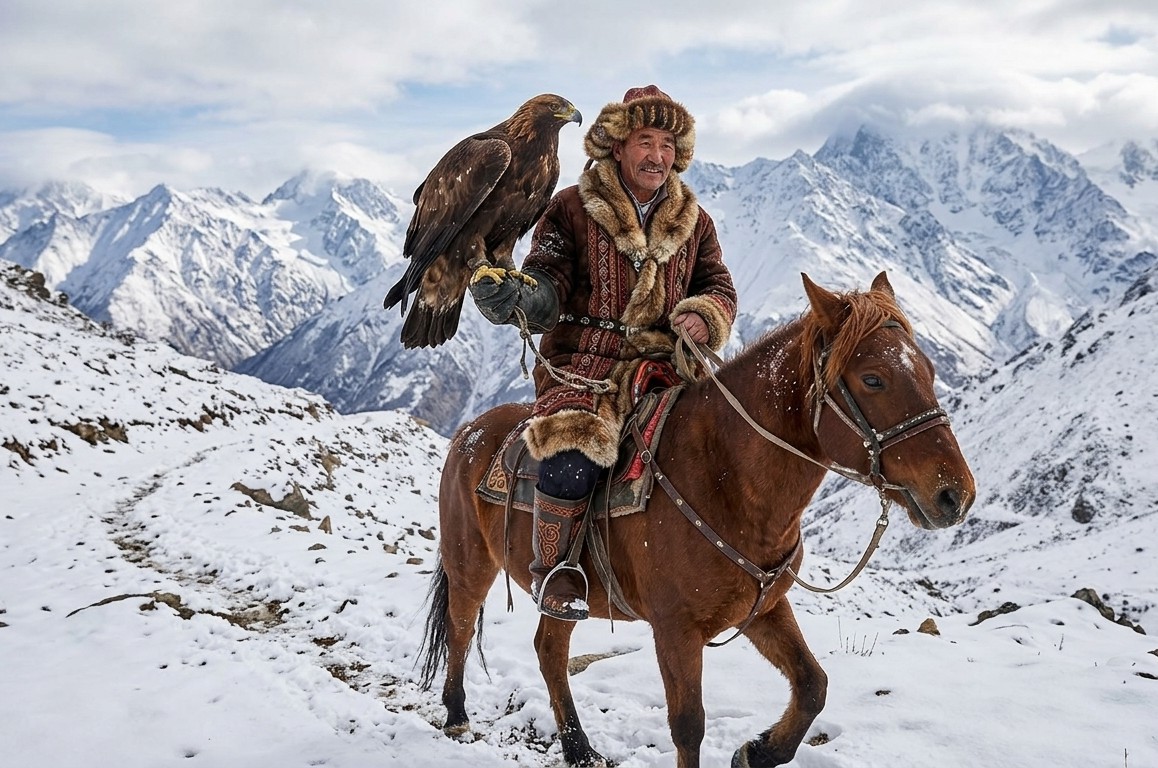
Kusbegelik is the traditional Kazakh art of training birds of prey—primarily golden eagles, falcons, and hawks—for hunting. It represents a profound spiritual bond and mutual trust between human and eagle.
History & Cultural Value
Kusbegelik is an ancient nomadic tradition spanning thousands of years across the Great Steppe. Historically, master eagle hunters (Berkutchi) held high social status within their tribes. In 2010, this heritage was officially inscribed on the UNESCO Representative List of the Intangible Cultural Heritage of Humanity.
Training & Competition Mechanics
- Eagle Training: Master hunters raise eagles from chicks or capture wild young birds, establishing deep trust through gentle handling and patience. The eagle wears a traditional leather hood (Tomaga) to keep calm until released.
- Salburun Competitions: Modern events evaluate two main criteria: the speed at which the eagle responds to the hunter's call to return to the gloved arm, and the accuracy of its strike on a dragged lure (shyrga).
- Releasing to the Wild: Ethically, a Berkutchi never keeps an eagle for life. After 5 to 7 years of partnership, the eagle is released back into the wild to nest and sustain the wild population.
Today, national tournaments like 'Kansonar' keep this majestic sport thriving for modern audiences.