Beshbarmak
The iconic national dish of Kazakh steppes and ultimate symbol of hospitality
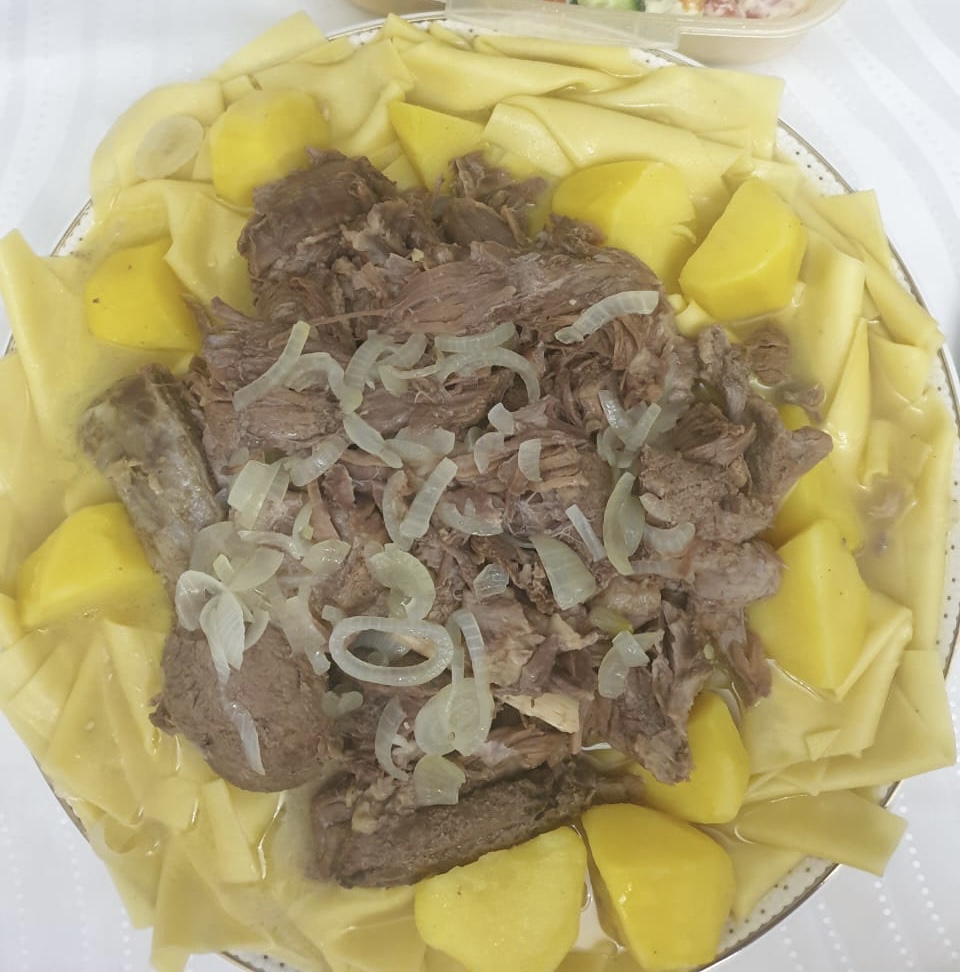
Beshbarmak is the heart and soul of Kazakh cuisine. More than just a dish, it is an ancient culinary ceremony honoring guests and family ties.
Beshbarmak (meaning 'five fingers') is the defining masterpiece of Kazakh nomadic gastronomy. Historically eaten by hand around the family table, this hearty dish represents the spirit of togetherness, respect, and boundless steppe hospitality.
1. Meat Selection and Slow Simmering
The soul of Beshbarmak lies in high-quality meat. The most prestigious preparation features prime horse meat delicacies—Kazy (rib sausage), Karta, Zhal, and Zhaya—often combined with bone-in mutton. Meat is placed in a large cauldron (Kazan) with cold water and slowly simmered for 2 to 2.5 hours. The foam is meticulously skimmed off, while the rich surface fat is rendered and saved for the onion sauce. Salt, bay leaves, and peppercorns are added towards the end of cooking.
2. Crafting Handmade Flat Noodles (Jaima)
While the meat cooks, the dough is prepared using high-protein flour, eggs, salt, and chilled meat broth. After resting for 30 minutes, the dough is rolled out thinly and sliced into 8x8 cm squares or diamonds (Jaima). These dough sheets are boiled directly in the bubbling meat broth for 3–4 minutes until silky and flavorful.
3. The Signature Onion Sauce (Tuzdyk)
Tuzdyk is the key finishing touch. Thinly sliced onion rings are placed in a small saucepan, drenched with hot fat skimmed from the simmering meat broth, seasoned with freshly ground black pepper, and gently stewed for 2–3 minutes. The onions remain slightly crunchy, balancing the rich meats.
4. Presentation in Astau and Serving Etiquette
Beshbarmak is traditionally served on a wide carved wooden platter called an Astau. The boiled noodles form the bed, topped generously with carved meats, and finished with hot Tuzdyk sauce. In formal gatherings, a honored ritual ('Bas Tartat') is held where the animal head is carved by the elder and distributed according to hierarchy. The meal concludes with bowls of rich, clear hot broth (Sorpa).